

Welcome back to Wired For Visibility, your fortnightly sweep of everything shifting in AI visibility, SEO, GEO and AEO. Five minutes, and you are up to speed.
Update #3 - 17 September 2026
Novig may have generated massive attention. But, AI will remember the backlash.
We covered this one yesterday in Novig and Sweeney. Scandal was the plan all along. In summary, the outrage was the strategy, and for a challenger brand buying awareness rather than approval, it did the job. What we didn't get to is what the fallout leaves behind in AI answers.
The campaign pulled 42 million Instagram views, and mentions up from 392 a week to 4,633 in four days. Public interest in a story like this will fades, but what's left behind is a trail of negative sentiment, and from an AI visibility point of view, that's most likely detrimental. Coverage like this doesn't disappear from the internet. It stays there, and gets used as source material for AI answers now and model training later. AI systems know who Novig is this month, but the words sitting beside the name are "nude", "ad" and "backlash" rather than "prediction market" or "how it works". Ask an assistant to compare betting apps and there's nothing about the product for it to use.
Sources: WiredCo., 5W Research, The Straight.
Our take: Volume isn't the thing to watch when it comes to AI visibility, sentiment is. AI answers carry the tone of whatever they're built from, so a brand with thousands of negative mentions behind it gets described in critical terms every time someone asks about it. It also makes Novig easy to leave out of a straight recommendation, because nothing in the record says the product is any good. That's the real cost her that perhaps Novig didn’t think about. Recommendations come out of that same material, and models will avoid recommending a brand when its name is tied to such poor sentiment.
Your AI visibility problem might not be a marketing problem
Veteran enterprise SEO Jessica Bowman told Search Engine Land this fortnight that AI is becoming “the world's most sophisticated buyer advisor,” and it's drawing on a lot more than your marketing. She described a client ChatGPT wouldn't recommend, when she asked why directly, it pointed to complaints about product quality, returns and refunds. “That's not something marketing can solve,” she said. “That is completely operational.”
Her best example: ChatGPT once steered her away from the vacuum with the strongest suction, because it remembered from an earlier chat that she'd mentioned dealing with fatigue, and judged that the heavier model wasn't the right fit. AI isn't just reading your content, it's reading reviews, return policies and remembering the conversation.
Sources: Search Engine Land.
Our take: this is exactly why we say AI visibility is a whole-business effort, not just the organic visibility team's job. If your returns process, reviews or customer service are letting you down, no amount of content or optimisation will fix that. AI visibility strategies need to integrate with ops and CX, not just marketing.
Who pays for the news? Google's quietly testing an answer.
Google has a new trick up its sleeve, and for once it might actually pay you for it. It's testing a way to pay some website owners when their content helps write an AI answer, inside AI Overviews, AI Mode or the Gemini app. It shows up as a small panel inside Google Search Console, with a monthly dollar figure attached. Right now, it's invite only, where Google has approached at least dozen sites, stretching well beyond news publishers. There's no public formula for how the payout is worked out, and one publisher in the pilot described the early numbers as “peanuts” next to their ad revenue.
Something worth flagging for our Aussie readers: Australia's own News Bargaining Incentive (Wired For Visibility edition #2) charges big platforms for using news generally, but the law doesn't directly cover answers generated purely by AI. So even with our own legislation already in force, this global pilot is quietly filling a gap our law current doesn't cover.
Sources: Search Engine Journal.
Our take: Google is still working out what “worth paying for” actually means here, so treat this as a first step, not a genuine solution to the bigger problem. If you get the invite, join anyway, as from our perspective, there's no downside and you can leave any time, plus it's the closest thing to real data you'll get on how much your content is actually feeding AI answers. There's no menu to go check, Google has to invite you first, so keep an eye on Search Console over the next few months and you'll know if you're in. Just don't build any revenue forecasts around it yet, as nobody in the pilot knows if Google will scale this into something that actually moves the needle.
Google rerouted its own search links (and your reports might pick it up)
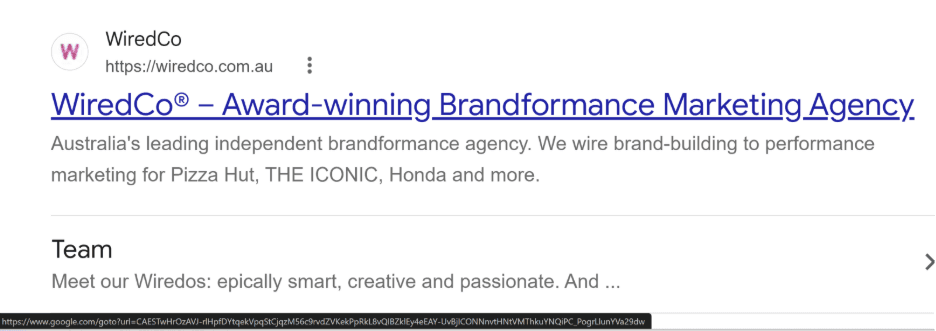
Sneaky one, this. On 26 August, Google confirmed it's now sending search result clicks through its own google.com/goto address before the visitor lands on the actual page. Nothing changes for the person clicking, same destination either way. But the direct link is no longer sitting in the results page for tools to read. Google called it a technical measure against “evolving forms of abuse,” aimed at making it harder for scrapers, rank trackers and AI systems to harvest its results at scale.
Here's the bit that’s relevant for your reporting. If the redirect strips referrer data on the way through, a real organic visit from Google can start showing up in Google Analytics (GA4) as “direct” traffic instead of “organic search”. Search Console itself is unaffected, since that data comes straight from Google, so it should becomes your reference point. If GSC clicks hold steady but GA4 organic drops, then check the redirect before you assume your rankings moved.
Tip: If you want to see this yourself, open an incognito window, search a normal keyword, and hover over or right-click an organic result. If the link shown is google.com/goto instead of the actual website address, that's the redirect, see the screenshot below. It's not consistent across every browser yet, so don't read too much into one clean test.
It’s probably worth explaining how the big ranking tools are handling this too, since you'll likely see it reflected in your own reports. Tools like Ahrefs and Semrush work by sending a computer program to read Google's results page every day and note down which website address sits in which position, that's how they build ranking reports without a person checking by hand. Google's redirect makes that harder, because it now hides the real website address behind its own link instead of showing it plainly. Semrush says it wasn't caught out, it adjusted its system before the change caused any real problems, and its rankings have stayed accurate. Ahrefs was more upfront, it admitted some of the rankings it showed recently were briefly wrong because of this, and says its team is actively fixing it.
Sources: Search Engine Land.
Our take: set a baseline from last month, note your current Search Console clicks against your GA4 organic sessions, and your organic to direct split. If that ratio shifts over the next month, you'll know why, and it isn't a ranking drop. Same logic for your ranking reports: if you're on Ahrefs or Semrush, this shouldn't be showing up in your numbers, so a sudden ranking swing is more likely to be real than a redirect glitch. Nothing to fix on your site, this is purely a measurement quirk, but the kind that causes real panic if nobody's told you it's happening.
Microsoft's free tool shows you exactly what AI searched for before it found you
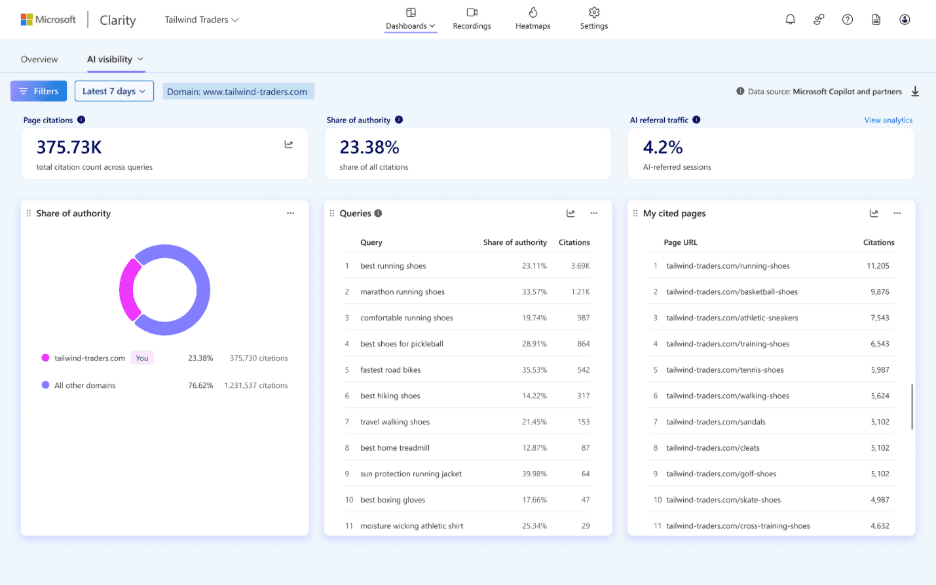
Not brand new this fortnight, but worth a mention since we haven't covered it: Microsoft Clarity's Citations dashboard is completely free, no traffic cap, no CDN needed, and it shows you “grounding queries”, the actual internal search terms Copilot and Bing's AI generate before they go looking for content. These aren't what the person typed. Ask Copilot “what's the best project management tool for remote teams” and it might search “project management software ERP integration compliance standards” behind the scenes. If your content doesn't answer that version of the question, it never gets considered.
Microsoft's been shipping fast on this: Citations went fully free in May, a branded versus non-branded split landed 3 August, and mid-August added Scrape-to-Referral Insights, connecting which AI bots actually crawl you to real visits and conversions.
Sources: Microsoft Clarity, Search Engine Journal.
Our take: setup is a script tag plus verifying your domain through Bing Webmaster Tools or Search Console, about ten minutes, genuinely free, no catch. Yes, it's Microsoft's own ecosystem (Copilot and Bing), not Google or ChatGPT. But the grounding queries you'll find are a legitimate look at how any AI model breaks a question down, and free first party data beats guessing every time.
Six weeks on, it's still the same five platforms doing the talking
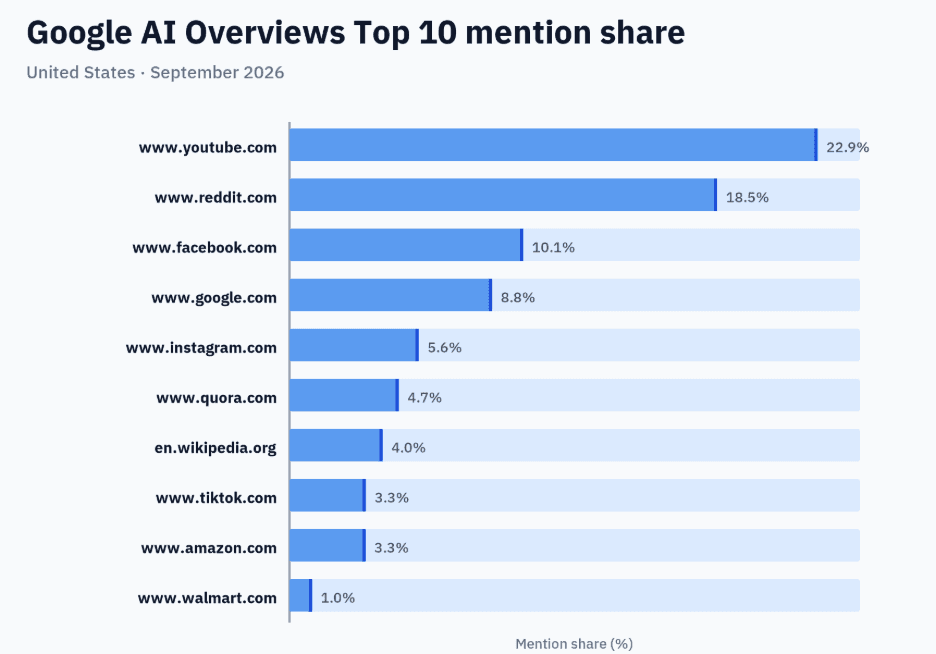
Ahrefs' fresh Brand Radar data on Google AI Overviews has YouTube leading citations at 22.9 per cent, then Reddit at 18.5, Facebook at 10.1, Google at 8.8 and Instagram at 5.6. It's almost the exact list our edition #1 opened with, for AI Mode. Different Google AI feature, same handful of platforms doing all the vouching.
A flag for our Aussie readers: this month's published figures are US market data, Ahrefs hasn't put out an Australia specific breakdown, and we checked, our own client tracking doesn't currently cover AI Overviews citations either. But there's no reason to expect these global platforms to behave differently here, we just can't back that with data today.
Sources: Ahrefs.
Our take: six weeks, three editions, and the advice hasn't moved an inch. If your whole AI visibility plan is your own website, you're focusing the one place AI trusts less than other sources. Start building content beyond your website if you haven't already, your organic social and Digital PR are probably doing more for your AI visibility than you think.
_________________________________________________
That's the fortnight sorted. Google found a way to start paying for AI answers, then made its own search links harder to trace in the same two weeks, Microsoft handed out a genuinely useful free tool, and the same five platforms keep turning up everywhere we look. None of it changes what you do on Monday, it just changes who else needs to be in the room when you plan it.
